
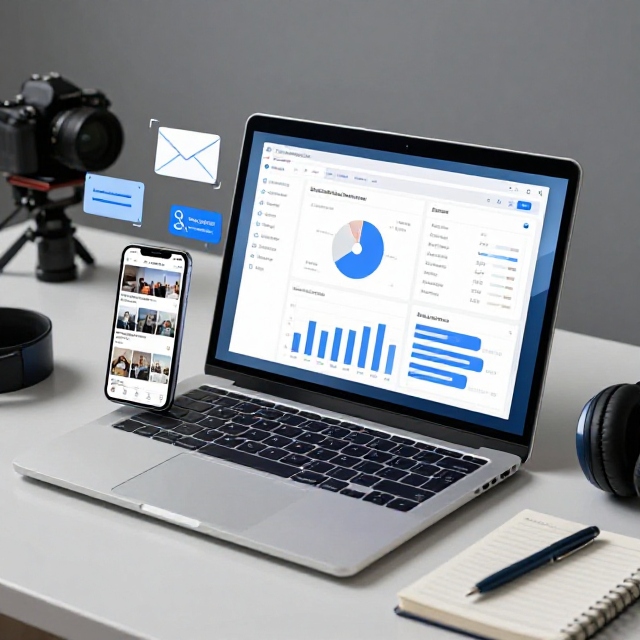
What is Digital Marketing?
Digital marketing has revolutionized business communication and interaction with consumers. Companies no longer stick to traditional media like television, print, or radio, which is why there’s a need for online platforms.There’s a need for online platforms as companies are no longer relying on traditional media like television, print, or radio to reach their audience, track campaign performance in real time, and make quick adjustments as needed. The marketing landscape is continually changing as digital channels continue to mature and strategies are made increasingly data-driven and agile.
Know the Mechanics of Digital Marketing
Marketing includes various techniques and media to promote products and increase market share. It takes an admixture of advertising and sales skill to be effective. These tasks are performed by professional marketers, within the walls of a single company or outside the walls of a company at marketing firms that can work for numerous clients.
In the past, only print, radio, and television were available for marketing, so the companies used them. While these still work, the internet has provided businesses with more means to connect with customers and established the field of digital marketing.
Companies had to rethink their marketing efforts and allocate their resources accordingly due to new technologies and trends. Early digital marketing was all about marketing via email. Then came the search engines and businesses could tag and key word items so that the business could be found. Social networking sites such as Facebook enabled companies to record their users’ data and send their messages to extremely targeted groups.
Companies can sell products to consumers from anywhere thanks to smartphones and portable devices; a large percentage of American adults already purchase products online using their portable device.
Exploring Various Digital Marketing Channels
Since the 1990s, digital marketing channels have been continually changing. Here are eight of the most common channels used these days.
Website Marketing
Businesses frequently leverage their own website for the whole of their digital marketing strategy. The best websites will showcase the brand and products and services in a clear and memorable manner. In today’s world, a site needs to be quick, responsive and mobile friendly.
Pay-Per-Click Advertising
Pay-per-click (PPC) advertising allows advertisers to place their ads in news and other sites and digital platforms. Marketers can create PPC campaigns on Google, Bing, LinkedIn, X (formerly Twitter), Pinterest and Facebook and they have the ability to display their ads to those who are searching for terms relating to their products or services.
These campaigns can be targeted to users depending on age, gender, or specific interests, or location. Google Ads and Facebook Ads are the most popular services for PPC.
Content Marketing
Content marketing aims to engage prospective customers by delivering information to them that they find interesting, whether it’s written, visual or video. It is typically written on a website and then shared via social media, email marketing, search engine optimization (SEO) or even pay-per-click (PPC) promotion. Content marketing tries to be less blatant than advertising, and the product or service that the sponsor is trying to sell may or may not be clearly advertised.
Email Marketing
Despite being regarded as spam by many, e-mail marketing is still one of the most effective digital marketing channels. They are among the many digital marketing channels that many digital marketers use to gather names for their e-mail lists. Then, via email marketing, they attempt to convert those leads into customers.
Social Media Marketing
Social media marketing’s main objectives are to create brand awareness and trust. As you get more involved in social media marketing, you can utilize it to acquire leads and as a marketing or sales channel. Promoted posts and tweets are two examples of social media marketing. The social media connection with the consumer buying journey is being felt today, with almost 7 in 10 shoppers using social media for shopping inspiration or to make purchases.
Affiliate Marketing
Affiliate marketing has been around before numerous online marketing channels, but it has grown substantially throughout the web. In the affiliate marketing business, an individual or company referred to as an “influencer” markets another company’s goods and products, and receives a commission for every sale or new lead generated. There are lots of popular companies offering affiliate programs, many of which pay out millions of dollars to their affiliates for their contributions in selling their products.
Video Marketing
Many people visit sites like YouTube before they place their purchase, to find out how to do something, to read a review or simply to unwind. Marketers can conduct video marketing campaigns via one of several video marketing platforms, such as Facebook Videos, Instagram, and TikTok. Companies have the best results with video when it’s combined with SEO, content marketing and larger social media marketing programs.
Text Messaging
Text messages (SMS) are used by companies to communicate news about products and promotions. Political candidates and nonprofit organisations also use texting to market themselves and raise money. Today many marketing campaigns make it possible for consumers to make a payment or donation via a simple text message.
Key Performance Indicators (KPIs) in Digital Marketing
Digital Marketers use KPIs just like traditional Marketers. KPIs enable them to gauge the long-term effectiveness of their marketing campaigns and how well they perform against their competition.
The following are some of the most common KPIs that marketers can use to gauge how well they’re doing:
- Click-through rate: This KPI is commonly used to measure the effectiveness of online advertising, by counting the number of people who clicked on a particular ad as a percentage of all the people who might have seen it.
- Conversion rate: Beyond click-throughs, the conversion rate is the percentage of people who performed some action that you’ve wanted, such as making a purchase, to the number of people who were exposed to your ad or promotion.
- Social media traffic: This measures the number of people interacting with a company’s social media pages. It contains likes, follows, views, shares and/or other measurable actions.
- Website traffic: This is a measure of the number of visitors that come to a business’s website over a period of time. It can be used for many reasons, including to determine whether or not a marketing campaign is effective in bringing customers to a Company’s site.
Digital Marketing Challenges
The digital world poses special challenges for marketers. For instance, digital channels grow in numbers at a blistering pace, and marketers need to catch up on those channels—and determine how and when to leverage them effectively. It can also be difficult for marketers to process and act on the vast amount of data they may be able to gather on these platforms.
But most crucial, consumers are surrounded by digital ads and other distractions, making it increasingly hard to grab consumers’ attention.
Explain Like I’m 5
Digital marketing is the method used by businesses to communicate about their products and services online. Rather than advertising in the newspaper or on the television, they display ads on websites, send e-mail messages, place posts on social networking sites, or use search engine results. The objective is to make people know about new products and get them to purchase them.
What Is SEO in Digital Marketing?
Optimization of search engines (SEO), is a set of techniques used by companies to try to attract traffic to their websites and improve their ranking. The more a site is in the top of the search results, the more likely the consumers will see it and click to visit it.
What Is Internet Marketing?
The term Internet marketing is used to describe marketing that is done on the Internet, or online. It is part of digital marketing which can incorporate SMS or mobile apps.
Which Skills are Required in Digital Marketing?
Good communication skills, social media and online advertising knowledge, and performance analysis skills are often the key requirements of a digital marketer. The ability to measure digital campaigns in real-time means that marketers need to feel at ease with analytics tools to assess and adjust their messaging.
The Bottom Line
With people spending more time online, businesses have taken a more integrated marketing approach, moving more of their work online. Digital marketing is similar to traditional marketing, but there are also some key differences: Data, analytics-driven audience targeting, and real-time performance tracking.