
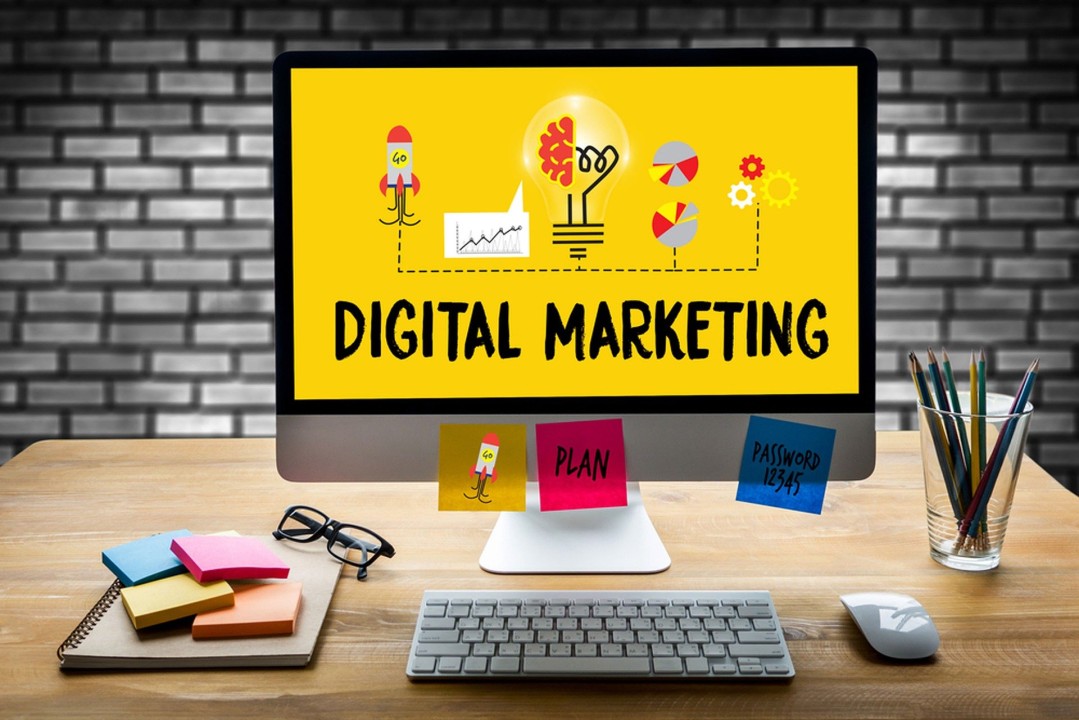
As the world becomes a competitive market, it is important for businesses to have an online presence to connect with customers and establish a successful brand. Today consumers are turning to the internet, search engines, social media, websites and online reviews to find products and services. Companies that adjust to these altering propensities can interface their objective groups more proficiently. This is where digital marketing can be a powerful tool for a business to prosper.
Digital marketing includes various online strategies, such as search engine optimization (SEO), social media marketing, content marketing, email campaigns, and paid advertising. These strategies can help businesses boost their visibility, reach out to potential customers, boost sales and cultivate a long-term customer base. Digital marketing offers opportunities for competition and growth, whether a company is based locally or has customers from around the globe.
What Is Digital Marketing?
Digital marketing is defined as the marketing of products, services or brands using digital media. Digital marketing differs from conventional marketing strategies like newspaper ads, billboards, and print brochures as it can target audiences on the internet.
It features organic tactics that bring visitors naturally and paid tactics that get quicker visibility. Analytics tools can also be used by businesses to gauge the performance of campaigns and understand customer behaviour.
Digital marketing channels include:
- Search engine optimization (SEO): Enhances website’s visibility on search engine results.
- Social media marketing: Supplies brand interaction with audiences on social media including Facebook, Instagram, LinkedIn and social networks that are relevant.
- Content marketing: Offers useful information in blogs, articles, videos, and other content.
- Email marketing: Sends subscribers offers, updates and useful information directly.
- Pay-per-click advertising (PPC): Gives businesses the ability to show ads to users with an interest in their product or services.
- Affiliate and influencer marketing: Supports brands with new customers by means of trusted partners and influencers.
Combining these channels strategically enables businesses to create a consistent online presence.
Why Digital Marketing is Important for Business Growth
1. Increases Online Visibility
For businesses, the visibility of their product or services online is vital to enable their customers to find them. But even a great product can fail to make sales if potential consumers don’t know the brand online.
Digital marketing is useful for companies to make themselves visible on search engines, social media, online directories and desired advertising campaigns. SEO, specifically, can be used to bring in visitors who are looking for a particular solution, service or product.
Optimizing a business profile, gathering authentic reviews from customers, and posting location-specific content can also help increase a local business’s visibility.
The more visible your business is, the more opportunities you have to get the right visitors and turn them into customers.
2. Reaches the Right Target Audience
One of the biggest benefits of digital marketing is the ability to target certain audience segments. The platform and data available will determine what kind of data can be used to create a campaign, such as location, interests, search intent, and previous interactions.
For instance, a local fitness club can advertise membership deals to its local community and a business-to-business (B2B) business can target decision makers via professional networks.
Campaigns that are targeted can assist businesses to make use of their marketing budget more effectively by concentrating on audiences that are more inclined to be interested in their offerings. It is also important for businesses to adhere to privacy laws and the proper use of customer information.
3. Offers cost-efficient marketing opportunities
The traditional advertising process can be a very expensive printing, broadcasting and placement. There’s a variety of digital marketing strategies available for varying budgets, such as social media posts (organic), search engine optimization (SEO), email newsletters, and paid advertising.
Small businesses are able to start small, and then increase their marketing efforts as the campaign yields positive results.
A small business, for instance, may produce beneficial blog articles, optimize the web page, and have engaged social media sites prior to committing to substantial paid advertising.
But digital marketing doesn’t come cheap. Costs for professional services, content, advertising and software can be substantial. The idea is to choose techniques that offer a quantifiable return on the investment.
4. Creates brand awareness and credibility
Recognized, trusted businesses are more likely to be considered by customers. Digital marketing can help ensure that a brand is consistent in search results, on websites, social media profiles and other online sources.
By sharing knowledge, you prove your knowledge and expertise, and by answering customers’ questions professionally, you let your audience know that your business values their time.
Customer testimonials, true reviews, case studies, and honest product details can also aid credibility. Businesses need to steer clear of falsehoods and put their customers’ experience at the heart of their marketing.
As time goes on these activities can make a brand more recognizable and prompts customers to think of it when they are considering their purchase.
The Role of SEO in Digital Marketing Success
SEO marketing is a crucial part of a long-term digital marketing program. It makes websites easier to use, more useful and relevant to users who are searching for them online.
Good SEO includes keyword research, quality content, website optimization, mobile-friendliness, and page structure and internal linking.
A business that provides accounting services, for example, may publish informative articles about business bookkeeping, tax preparation and financial planning. These resources can draw traffic looking for solutions and expose them to the company’s products and/or services.
SEO typically doesn’t happen overnight, nor is it a one-time process. However, a site that’s well taken care of can prove to be a worthwhile source of relevant organic traffic with time.
How Social Media Marketing Strengthens Customer Relationships
Social media sites offer businesses direct access to their current and potential customers. Businesses can post news about their products, educational material, short videos, behind-the-scenes footage and customer stories.
They can learn about audience preference and discover questions that could impact on the purchasing process.
Community building can also be promoted through social media marketing. When businesses reply to comments, consider concerns, and provide valuable information, there are opportunities for meaningful engagement.
It is crucial to select the right platforms. Instead of trying to keep all the social media accounts, a business should concentrate on the ones where their target audience is found.
Uses Data and Analytics for Better Decisions
Another advantage of digital marketing is that numerous online actions can be measured. Appropriate analytics tools can be used to track website visits, ad clicks, lead submissions, email engagement and purchased items by a business.
These insights enable marketers to learn what works and what doesn’t in their campaigns—and what they can do to improve them.
Some key performance indicators could be:
- Website traffic: Measures how many people visit a website.
- Conversion rate: Percentage of visitors who perform a desired action.
- Cost Per Lead: Approximate price to make the lead.
- Advertising payback: Relates advertising revenue to advertising expenses.
- Customer acquisition cost: An estimation of how much it costs to acquire a new customer.
Businesses can use these metrics to make informed adjustments to their budgets, refine their campaign messages, and prioritize successful marketing campaigns. Reliable tracking, clear goals and appropriate data practices are essential to accurate measurement.
Digital Marketing allows companies to stay competitive
Customer expectations and internet is always evolving. Firms that regularly assess their marketing plans are better capable of adapting to the variations in demand and competition.
Competitor research, customer feedback and content changes, as well as campaign testing can provide insights into what products, services and communications can be refined.
Businesses can also try out various headlines, landing pages, offers, and creative formats by using digital marketing. These experiments can be used to determine the success of a campaign before companies invest more money, time, and resources.
Most successful businesses don’t use a single promotional approach but a combination of complementary channels which can help build a stronger, more consistent customer journey.
Best Practices for a Successful Digital Marketing Strategy
Clear business objectives are the starting point of a well-planned strategy. Businesses need to ask themselves if they would like to boost brand awareness, acquire leads, drive online sales, and retain customers.
Here are a few practices that will help improve outcomes:
Identify the target market: Know the needs, preferences, problems and buying habits of customers.
- Make measurable objectives: Make realistic goals for traffic, leads, conversions or revenue.
- Develop relevant content: Respond to customer inquiries and give product information that helps in the buying process.
- Optimize site: Make pages load quickly and be responsive on mobile devices.
- Choose appropriate channels: Prioritize marketing channels that meet business objectives and user behavior.
- Be consistent: Have a consistent approach to publishing content and to your brand messaging.
- Track performance: Boost results with trustworthy data.
Digital marketing should be viewed as a continuous process and not a single activity. Frequent evaluation can help pinpoint areas for improvement and strengths to capitalize on for long-term achievement.
Conclusion
The marketing strategy of digital marketing is a very potent tool that can be used by businesses for achieving success in their marketing activities because of its ability to boost their visibility on the internet, target the right audience, establish trust and credibility on their site, and measure the performance of their marketing strategies. Businesses can build valuable relationships with customers and identify new areas for growth by using SEO, social media marketing, content marketing, email marketing, and paid advertising.
The best strategy will vary depending on the company’s goals, target audience, budget, and business. A well-defined roadmap, compelling message, data-driven approach, and iterative optimization can help companies establish a solid online presence and futureproof their campaigns for long-term success.