
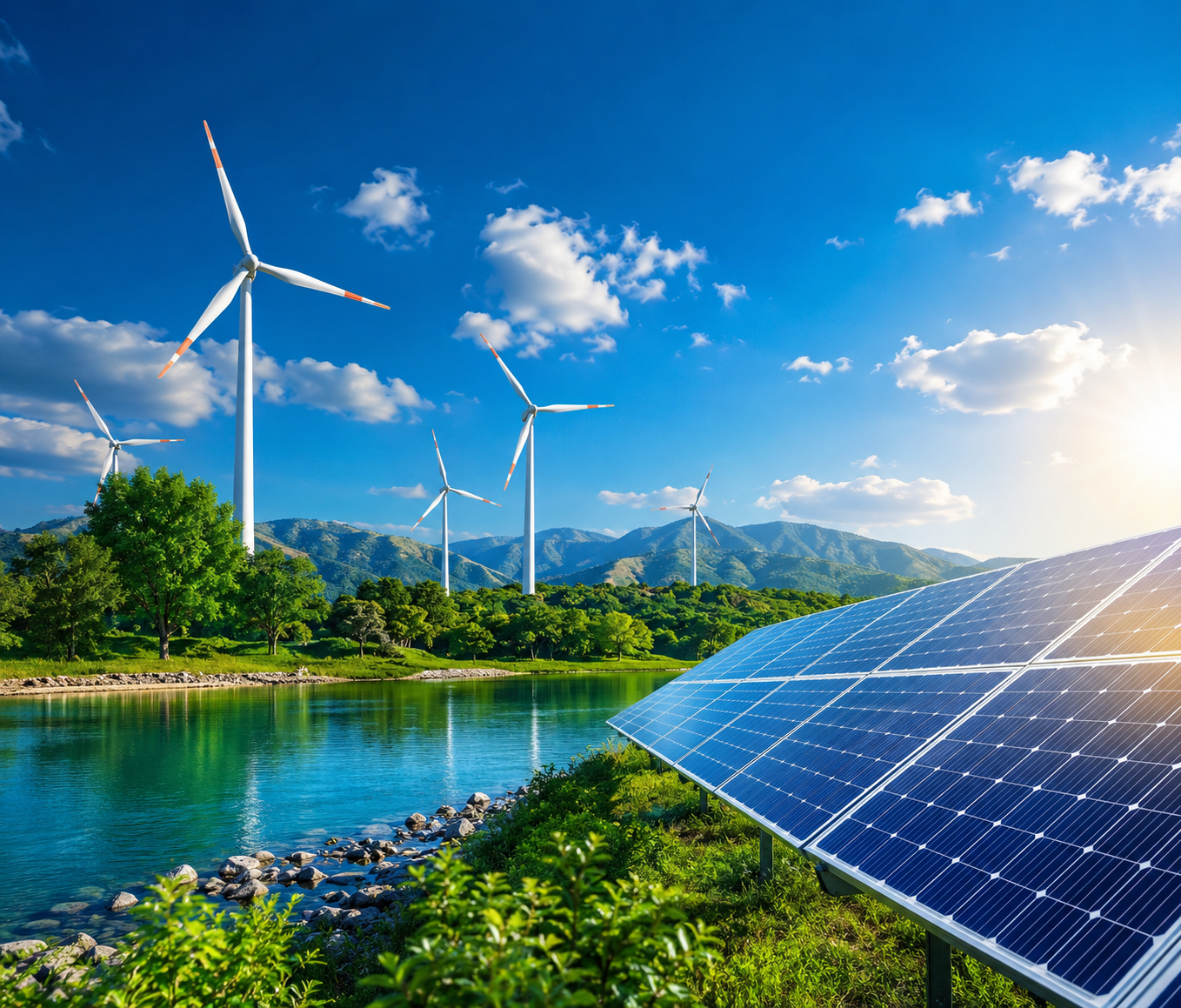
As nations, organizations, and communities seek sustainable and less polluting solutions to their rising energy consumption needs, renewable energy technologies are gaining significance. Renewable energy is derived from resources that can be naturally replenished, like sunlight, wind, water, the heat of the earth, and organic matter, compared to fossil fuels like coal, oil and natural gas. The world is changing its energy landscape by more than just traditional fossil fuels with solar, wind, hydropower, and other renewable technologies.
Changing to renewable energy is not just about carbon emissions. It can also help to enhance energy security, generate jobs, stimulate economic growth and foster technological innovation. Energy demand is increasing and renewable energy technologies can be a key component of a more sustainable future.
1. Reduce Greenhouse Gas Emissions
A significant advantage of renewable energy is that it could help lower emissions of greenhouse gases. Carbon dioxide and other pollutants are emitted from traditional fossil-fuel power plants in the production of electricity. These emissions may cause climate change and impact air quality.
Renewable energy systems typically have minimal direct GHG emissions when generating power. Electricity can be produced from solar and wind power without the use of fuel. The more renewable energy that can be added to the energy mix in countries, the lower their carbon emissions will be, and the more they will contribute to longer-term climate targets.
2. Providing Clean and Sustainable Energy
Renewable resources are resources that can be ‘replenished. The sun, wind, water and heat from the earth are available again and again, where fossil fuels are limited.
Solar energy can be harnessed using photovoltaic panels and wind power can be generated by wind turbines. Hydropower relies on water moving and geothermal systems utilize geothermal heat below the earth’s surface. Their technologies supply energy sources which can continue to serve future generations if developed and managed responsibly.
3. Improving Energy Security
Relying on imported fossil fuels can put countries at risk due to fluctuations in global energy prices, disruptions in energy supplies, and geopolitical tensions. Reducing this dependence can be achieved by helping countries to produce more energy at home using renewable energy.
For instance, if a sunny area is available, solar farms can be developed, and if the area is coastal or windy, wind power can be utilized. The development of multiple domestic energy resources can lead to a more resilient energy system and less reliance on external fuel markets.
4. Generating new jobs
Many sectors can benefit financially from the renewable energy sector and create jobs. The solar panel industry, the PV industry, and wind energy development, wind turbine maintenance, and energy storage companies are all looking for skilled workers.
Renewable technologies are growing, and there may be a need for more engineers, technicians, construction workers, researchers, software developers, project managers, and environmental specialists. This is a chance to build the clean-energy workforce and new careers.
5. Supporting Economic Growth
Investment in renewable energy has the potential to drive economic activity. Solar and wind power investments on a large scale need equipment, services in construction, transport, engineering, maintenance and other supporting sectors.
Another advantage of renewable energy is for the benefit of rural and developing communities. Local economic benefits can be achieved from solar farms and wind projects via leasing, infrastructure building and jobs. Small-scale renewables can also help businesses and households to minimise exposure to increasing conventional energy prices.
6. Improving Access to Electricity
In remote regions, where supplying electricity through traditional power lines could be costly or challenging, renewable technologies can play a role in providing access to electricity. Decentralized technologies such as solar home systems, mini-grids, small wind systems can deliver electricity to communities that are remote from large scale transmission networks.
This can have social benefits that are more widespread. Schools, health centers, communications, businesses, water pumping, and local areas can be powered by reliable electricity. Thus, renewable energy can play a role in the economic and social development.
7. Reducing Air Pollution
Pollutants like sulfur dioxide, nitrogen oxides, and particulates can be emitted when burning fossil fuels. These pollutants may lead to poor air quality and environmental and public health issues.
Renewable electricity technologies like solar and wind do not involve combustion in generating electricity. Consequently, some fossil-fuel electricity production can be replaced by cleaner energy production to reduce local air pollution, especially if there is a high reliance on coal-fired power plants.
8. Encouraging Technological Innovation
Innovation in renewable energy is promoting advances in energy storage, smart grid, power electronics, artificial intelligence and energy management. Batteries are becoming more critical as they can store electricity when it is available but demand is absent to use later when demand is present.
Digital technologies can also enable energy providers to predict electricity generation, match demand and supply and control distributed energy resources. Ongoing innovation can lead to more efficient, flexible and cost-effective systems of renewable energy.
9. Reducing the Cost of Long-Term Energy
While renewable energy projects can come with a high initial price tag, many renewable resources have very low operating and fuel costs. For example, solar, wind and other facilities do not need to be continually buying fuel to generate electric power.
Renewable energy systems can be more affordable as technology advances and manufacturing increases. Depending on local regulations, energy use, and cost, incentives, and other factors, households and businesses can also save on grid electricity after installing a solar system.
10. Enabling a More Resilient Energy System
To achieve a sustainable energy future, systems must have the ability to adapt to shifts in system conditions and disruptions. Resilience can be achieved with renewable energy if all these factors are combined with energy storage, smart grid, smart transmission, and diversified generation.
Distributed renewable sources can be very beneficial as electricity production is not concentrated in a few large power plants. These can be engineered to provide critical power services to communities in some cases, during disruptions.
The Function of Energy Storage
The variable nature of resources like sunlight and wind is one of the difficulties of renewable energy. The electricity from solar panels is generated during the day, and electricity from the wind is generated depending on the weather. However, energy storage can be a solution to help overcome this problem.
One of the most crucial solutions is battery storage. Surplus electricity can be saved when the renewable generation is in excess and utilized during the periods of reduced generation. Other forms of energy such as pumped storage hydro and new, longer duration storage technologies can play a role in grid flexibility.
Challenges to Consider
While there are great benefits to be reaped from renewable energy, there is also a need for careful planning to be made during the transition. The cost of new generation and transmission projects can be high. Other factors that can affect renewable projects are land-use, permitting, supply-chain, and environmental issues.
- Rise in variable renewable generation: Modernizing electricity networks for a growing share of variable renewable energy.
- Flexibility: More storage allows for greater flexibility in the supply of renewables.
- Technical skills: Developing clean-energy sectors need the right skills and training.
Biodiversity, land use, communities and resource efficiency should be taken into account when developing renewables.
Conclusion
Renewable energy technologies offer significant environmental and economic and social benefits, and can contribute to the transition to a more sustainable energy system. Renewable energy can help deliver long-term development by lessening reliance on fossil fuels, reducing emissions, enhancing energy security, generating employment opportunities, and fostering technological innovation.
No single technology will be the most effective transition. A transition to a cleaner, more resilient energy future can be achieved through solar, wind, hydropower, geothermal, sustainable bioenergy, energy storage, modern transmission networks, and energy efficiency. Renewable energy is poised to play an increasingly significant role in sustainable economic and environmental development, particularly with the advancement of technology and rising investments.